Women and Work: artistic labour and modes of
production under contemporary capitalism
Responding to the seminal feminist artwork ‘Women & Work: A Document on the Division of Labour in Industry 1973-75’, artists and collaborators Maxima Smith and Madeleine Pledge undertake an R&D project to develop the theoretical and studio-based aspects of their work.
Focussing on their interest in artistic labour and modes of production under contemporary capitalism, they will develop new ways of making that connect theory and practice through archival investigation, public research sessions, and a self-directed residency.
To give a sense of the project, we have included below:
– Materials from Women & Work: A Document on the Division of Labour in Industry 1973-75, including images of workers in the metal box factory the artwork focussed on.
We have placed these alongside images of the co-working spaces based in the former factory sites in Bermondsey, where we will be conducting part of our research. These comparisons start to shape the spacial juxtapositions that our studio work will take shape around.
– Examples of our previous work as Industria
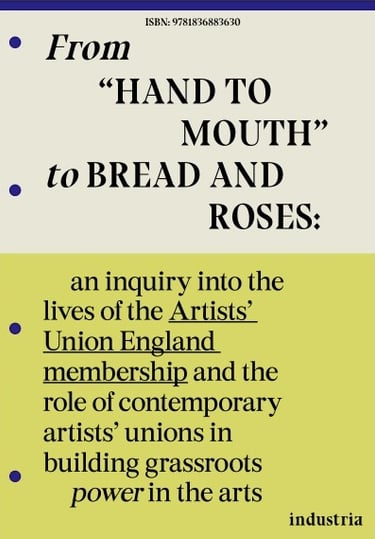
Excerpts and links for our two major reports, both of which focussed on pay and working conditions for artists and the material conditions needed to make artistic labour possible. This project continues these lines of inquiry, and our reflective research document on this proposal will feed into future reports.
– Examples of Madeleine Pledge and Maxima Smith's work as individual artists
The research phases of the project will feed into joint studio-based development, working with and between our respective artistic processes with sculpture and video / photography.


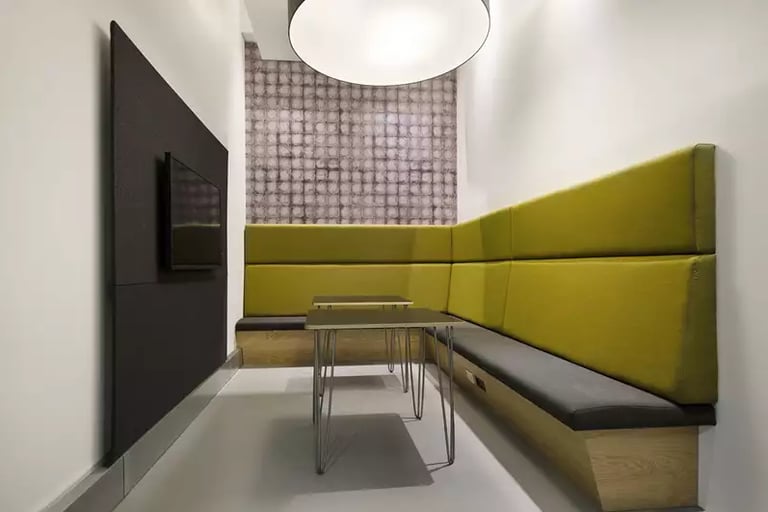
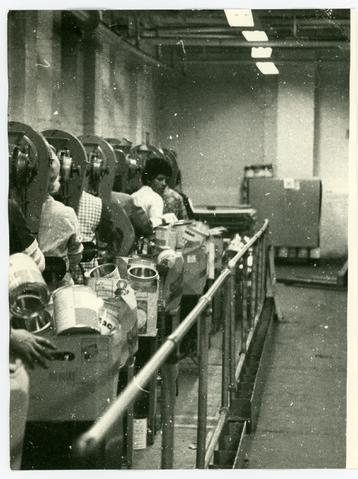
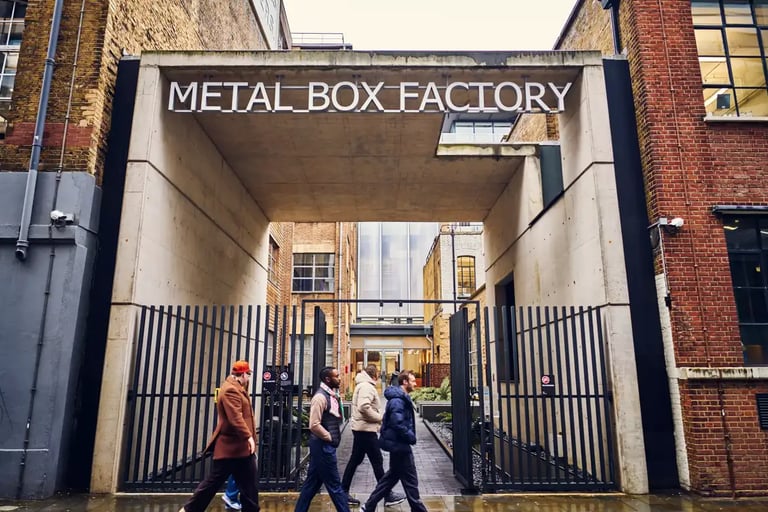


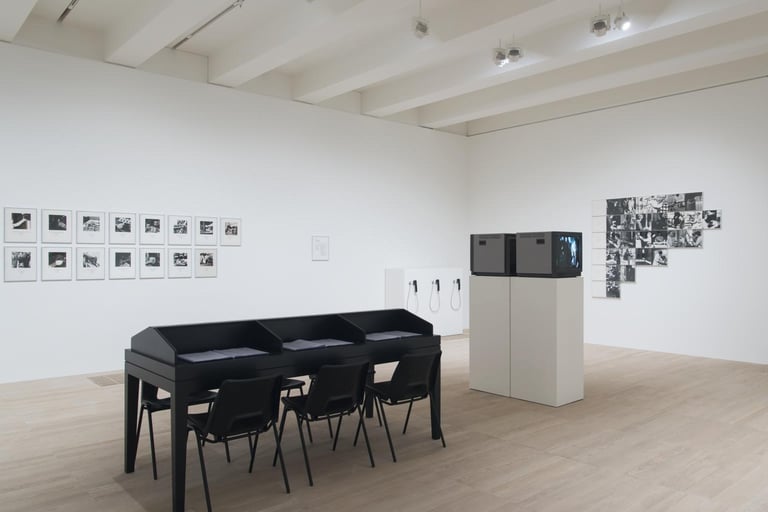
Materials from Women & Work: A Document on the Division of Labour in Industry 1973-75 by Mary Kelly, Kaye Hunt, and Margaret Harrison. The methods, media, and presentation of their inquiry will inform the shape of our project and its outcomes


1.
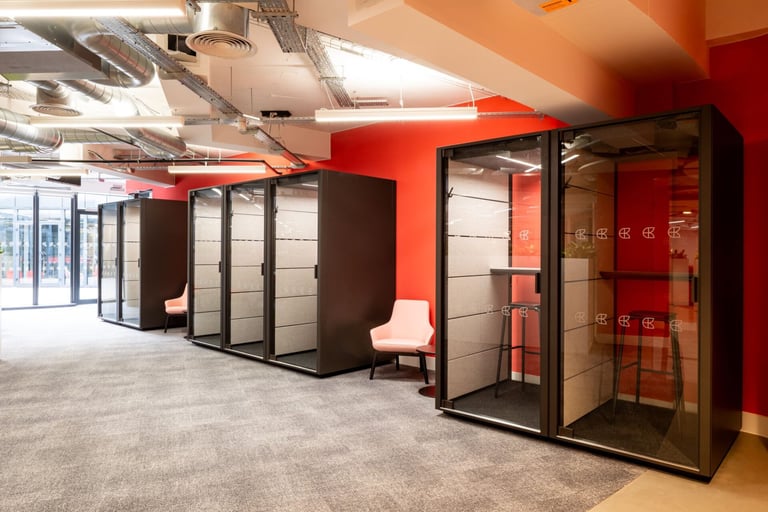
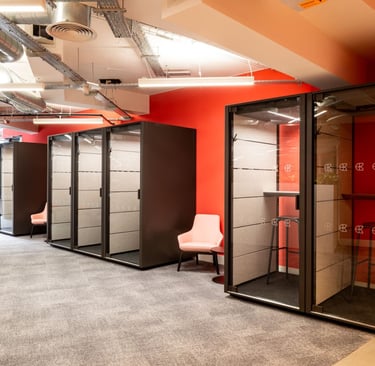
The exterior of one of the Metal Box Factory sites – now a co-working space named after the building's original use
Interiors from both former factory sites compared with images from Hunt, Kelly and Harrison's work documenting women workers in the factory.
Our self-directed on-site 'research residency' will take place in and document these new architectures of work and the working practices they develop.
2.
Examples of our previous collaborative research outcomes as Industria
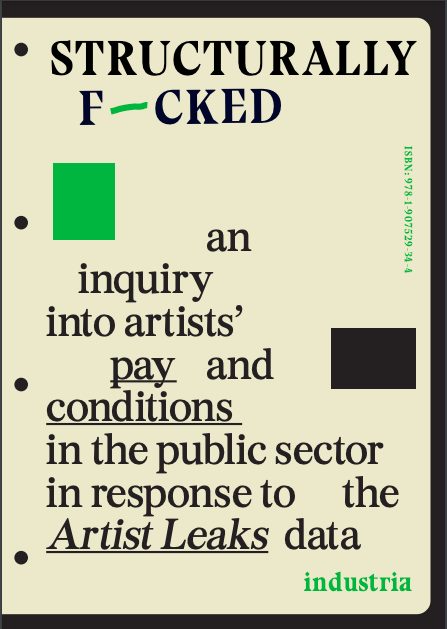
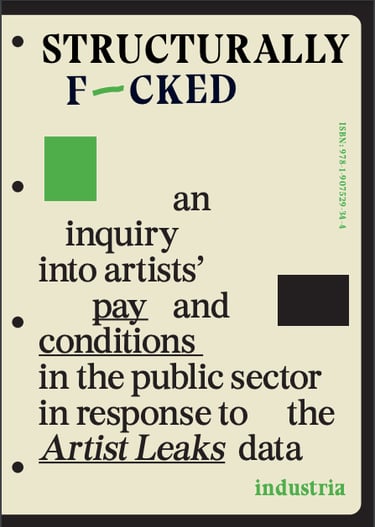
STRUCTURALLY F-CKED, commissioned and published by a-n, 2023
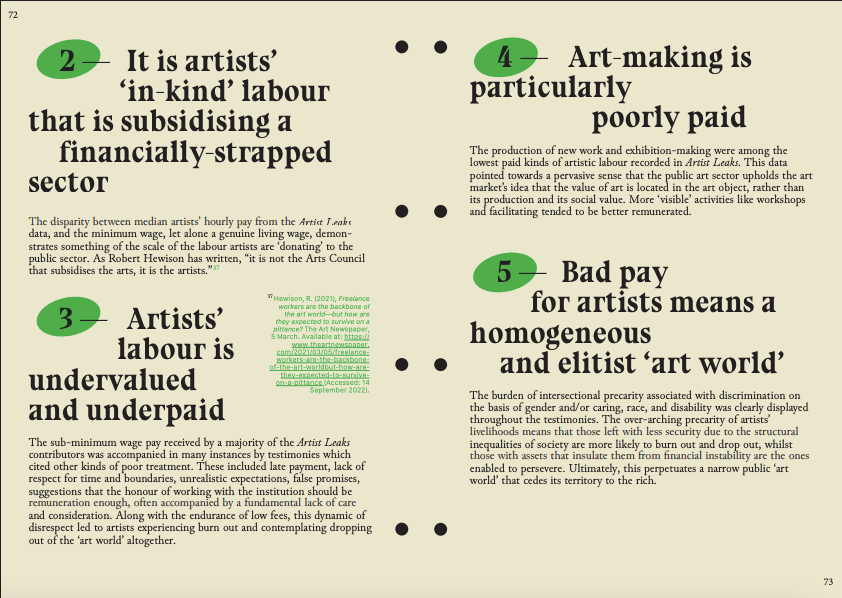
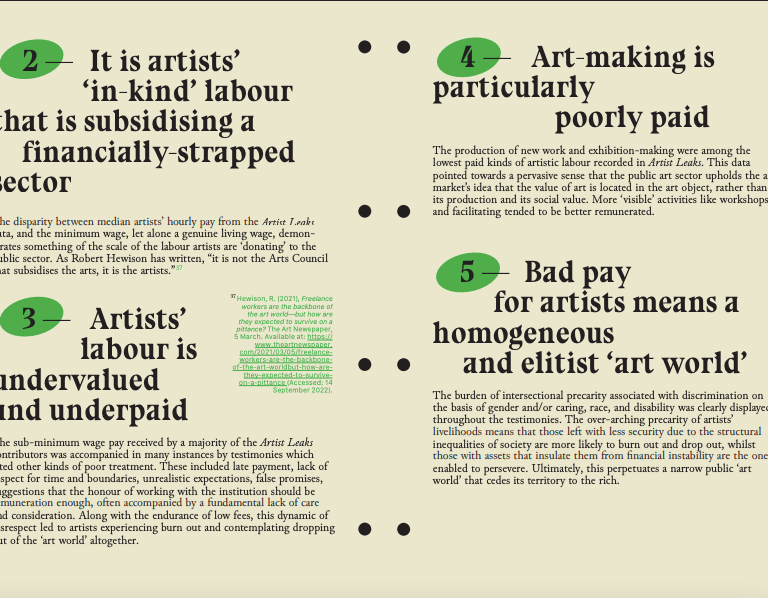
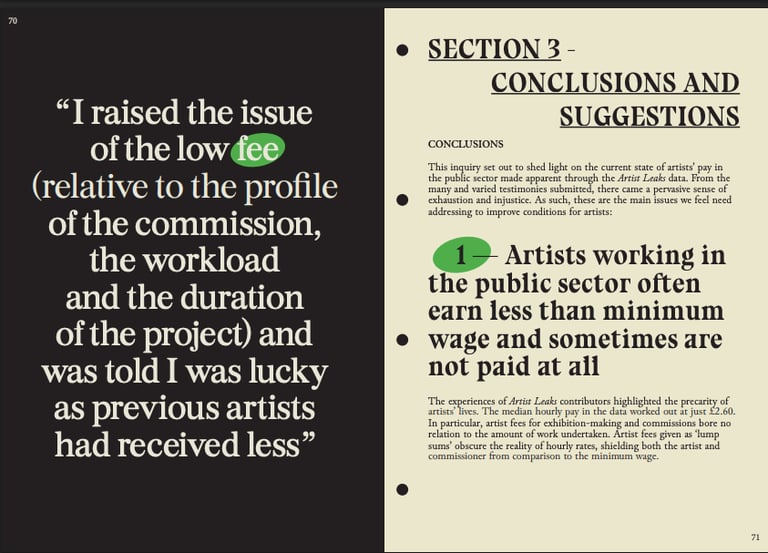
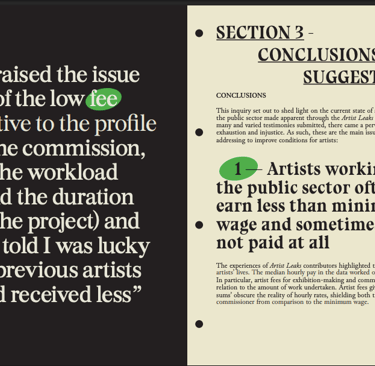
This report into artists’ pay and working conditions revealed the extent of underpayment of artists in the UK’s public art sector. Structurally F–cked draws its title and data from testimonies gathered through Artist Leaks, an anonymous online survey of visual artists conducted by Industria.
Artist Leaks received 104 responses from artists who had been contracted to deliver projects by publicly funded galleries in England, Scotland and Northern Ireland. The projects ranged from major commissions and solo exhibitions, to talks and education workshops.
The extensive questionnaire invited artists to share their experiences and fees, which are typically obscured from public view. The resulting data illustrates a culture of low fees, unpaid labour, and systemic exploitation.
Alongside the report and recommendations for action, the inquiry included commissioned texts from Lola Olufemi, Jack Ky Tan, and Juliet Jacques.
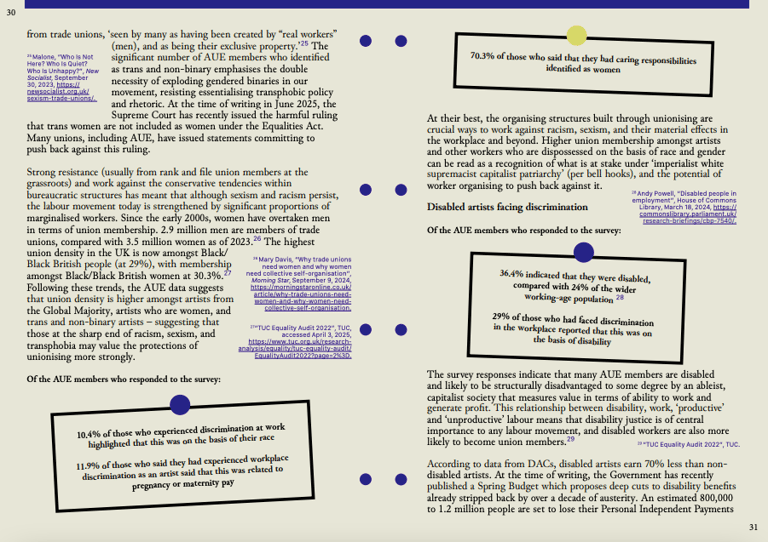
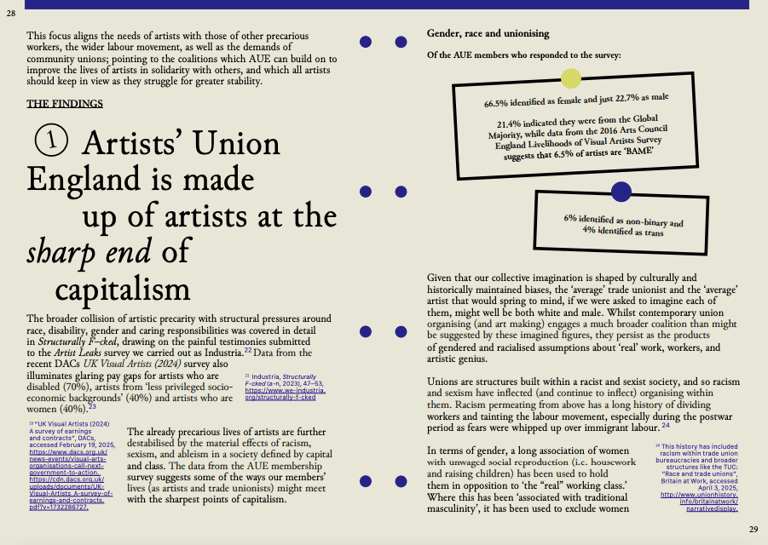
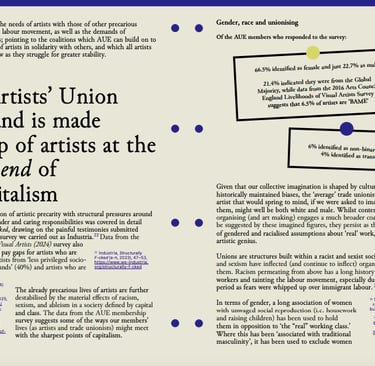
From "Hand to Mouth" to Bread and Roses, commissioned and published by Artists' Union England, 2025
Working under the title Industria, our collaborative research and organising practice grew out of a friendship begun during our studies at the Slade.
After we both graduated in 2017 and were faced by the material conditions the vast artists work within, we began a programme of conversations, research, and organising that has now spanned nearly a decade.
Our most significant public projects have been two published inquiries into the lives and working conditions of artists. More information about each of these is included below.
These major pieces of research have informed this proposal, and will shape our research during the course of it. In turn, the research and development conducted during the project will shape future work in this vein.
From “Hand to Mouth” to Bread and Roses looks at the lives and livelihoods of artists who are members of Artists Union England (AUE) and reveals how deteriorating material conditions and a shrinking social safety net are making it harder for artists to be artists.
Drawing on data from the 2024 AUE membership survey, alongside other recent reports on artists’ livelihoods, the inquiry builds a clear and compelling picture of what life is really like for artists working today.
Looking at the bigger picture of housing and studio provision, pensions and savings, as well as artists’ earnings, it makes the case for unionising as artists as an essential way to build the grassroots power required to overturn these conditions, for artists and for everyone.
Industria is an artist-run organisation, examining and challenging the current conditions of the ‘art world’
Industria is against:
an exploitative ‘art world’ that requires the precarity of artists and a low-wage, gig economy in order to run.
Industria is for:
an (art) world that dismantles myths of meritocracy, seeking unconditional dignity and the possibility of creative lives for all.
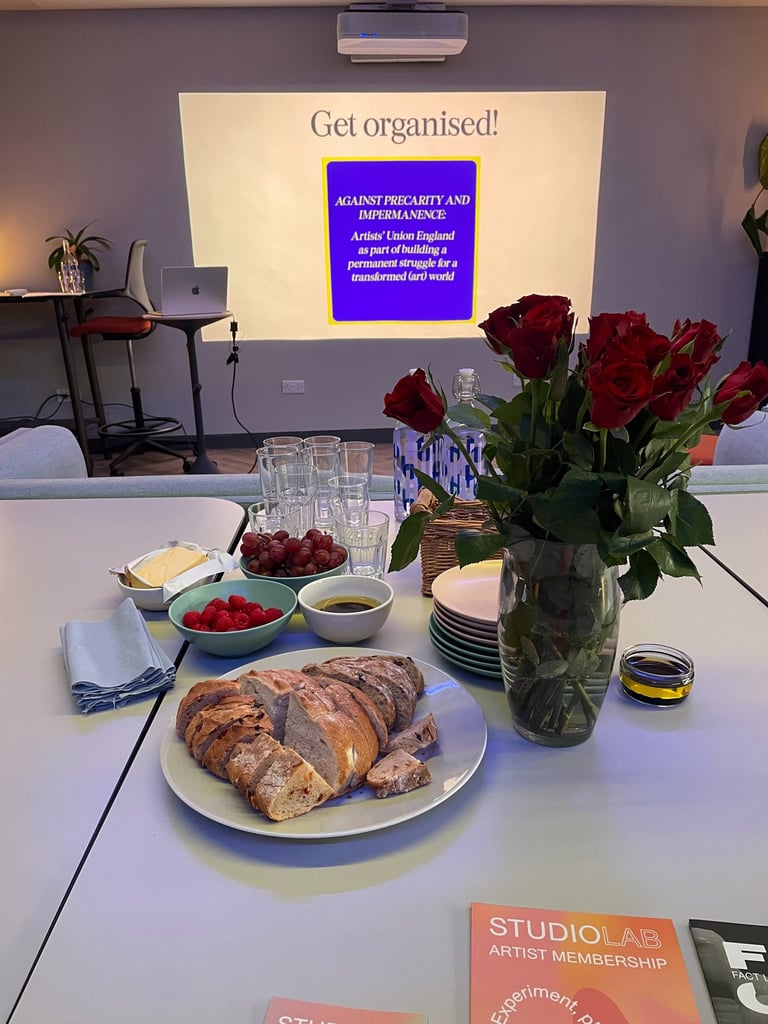
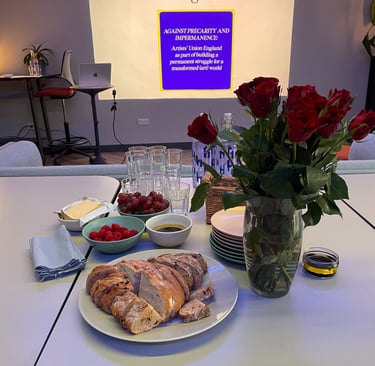
image of the setup for a workshop we ran for 30 artists at FACT Studiolab in Liverpool, presenting the content and context of both of our reports
3.
Our work as individual artists
Madeleine Pledge (b. Kent, UK) lives and works in London
and is an artist, art worker, and organiser.
In her work as an artist, she accumulates, stacks, disassembles, and recasts the objects, surfaces, images and texts that dress and address us under capitalism. Remaking and re-organising material pulled from the structures of fashion, design, the space of the city, and existing legacies of artistic production, she engages with the circulation of (feminised) images, public and private space, and systems of labour, production, consumption, and power. Across shifting configurations of cropped, stretched, and implied figures and infrastructures, she makes strategic use of sculpture’s relationship to the vertical and the horizontal to rehearse possibilities of individual positioning and collective organisation.
She is currently organising as part of the National Executive Committee of Artists’ Union England and co-coordinates the artist-run project Industria, alongside additional commitments to worker organising and politicising the context of artistic labour.
Her first work in the public realm, superstructure (public image), commissioned by Devonshire Collective, was on view as part of Eastbourne Alive in celebration of the Turner Prize throughout 2023-4. Solo and two-person exhibitions include consumer, presented by Sherbet Green as part of First Editions, Collective Ending, London, 2023; Weaponized Glamour, Case Study Project Space, London, 2021 (with Alice Channer), and Stretch, Flatland Projects, Hastings, 2019. Her work has been included in group exhibitions at Whitechapel Gallery, London, and Towner, Eastbourne.
In 2022, she was a lead artist on the Camden Art Centre Transformative Futures programme. In 2020, she was the recipient of a Henry Moore Foundation Artist Award grant, and was shortlisted for the Mark Tanner Sculpture Award in 2020 and 2024.
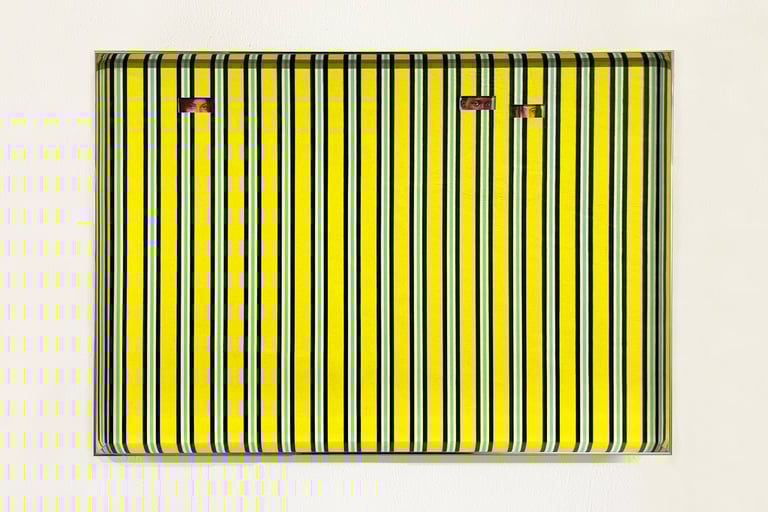
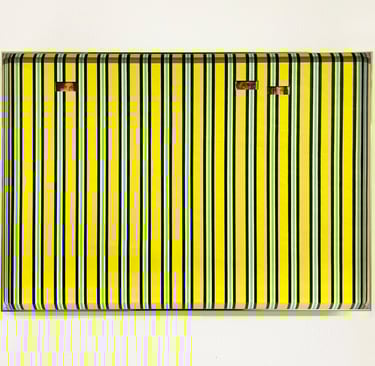
public image (co-conspirators) (triple crop, double spread, vertical), 2025
magazine advert, striped printed leather (Versace surplus / seconds), brushed and polished aluminium frame 29.4 x 41.8 x 3.3 cm
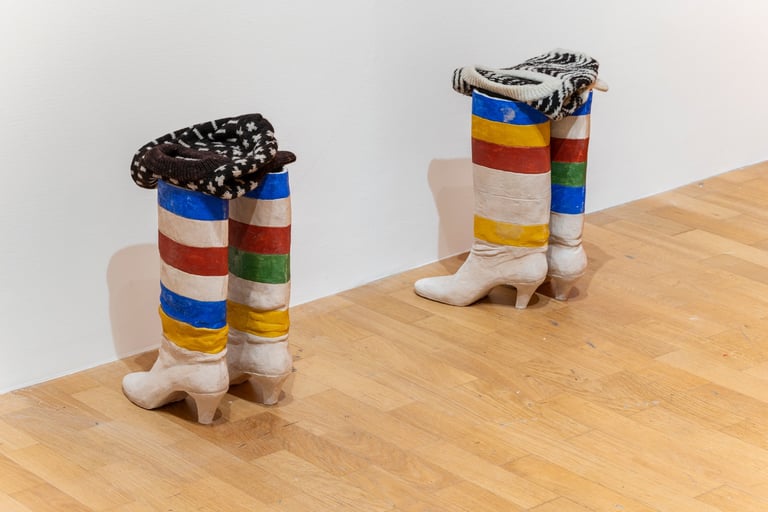
left: Balaclava (+/–), 2019
inverted, greyscaled, and horizontally flipped ‘+/–’ balaclava after Rosemarie Trockel; design translated from images and knitted by Sarah Shepherd
machine knitted donegal lambswool hand dyed with natural hair dye (ebony black) and squid ink, undyed donegal lambswool (natural chalk)
Be Soft But Not Too Soft (Michelle), 2019
boots modelled after a pair owned by Michelle Williams Gamaker
unfired flax fibre clay with grogged body (hand modelled); red, blue, green, and yellow iron oxides
right: Balaclava (op), 2019
inverted 'op' balaclava after Rosemarie Trockel;
design translated from images and knitted by Sarah Shepherd
machine knitted donegal lambswool hand dyed with natural hair dye (ebony black) and squid ink, undyed donegal lambswool (natural chalk)
Be Soft But Not Too Soft (Michelle), 2019
boots modelled after a pair owned by Michelle Williams Gamaker
unfired flax fibre clay with grogged body (hand modelled); red, blue, green, and yellow iron oxides
Maxima Smith works across moving image, photography, and performance to camera, using re-enactment-based methodologies to examine how identity is constructed, performed, and disrupted. She questions feminine archetypes and roles, working with gendered acts such as mimicry to reinforce the performativity of gender. Her practice positions performance to camera as a tool for feminist inquiry, resistance, and repair.
Smith holds a BA from the Slade School of Fine Art in London (2016) and an MA in Art Praxis from the Dutch Art Institute (DAI, 2023). Smith’s solo exhibition Crocodile Tears (2024) at Asylum Studios in Suffolk digested the body of work made over the course of her time at the DAI. In the same year she was chosen for the LADA Screens award for her work Crying with My Family. After receiving the Queen Mary’s Commission and Award, Smith created Ode to a Window Cleaner; a body of work which included a live performance event, as well as a public art work at Queen Mary’s in London, and a multichannel video installation. She has continually shown at the Nunnery Gallery for their recurring moving-image programme, Visions (2022, 2020, 2018).
As well as exhibiting across the UK, Smith has shown internationally including as part of touring exhibition Mirroring, which was exhibited at Theater De Uitkijk, De Sloot, De Appel & Theatre Bellevue, Netherlands (2024). She has also exhibited as part of All That is Solid Melts Like My Blush After a Long Shift, Galerie Amu, (Prague, Czech Republic), Where the Moon is Up, Centrales Fies, Trento, Italy (2023); Invisible Goddess, Venice, Italy (2023); and Pixelache2019, Oranssi, Helsinki (2019).
Alongside this Maxima is a current member of the National Executive Committee of Artists’ Union England.
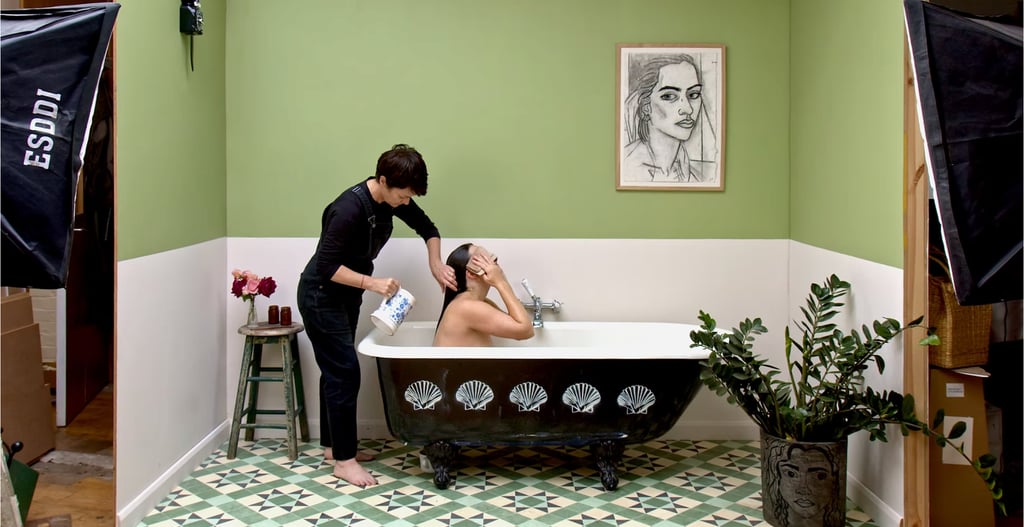
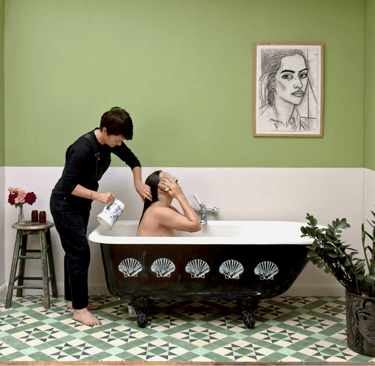
Portrait of the Artist as a Daughter, 2023, Moving Image, 12:58
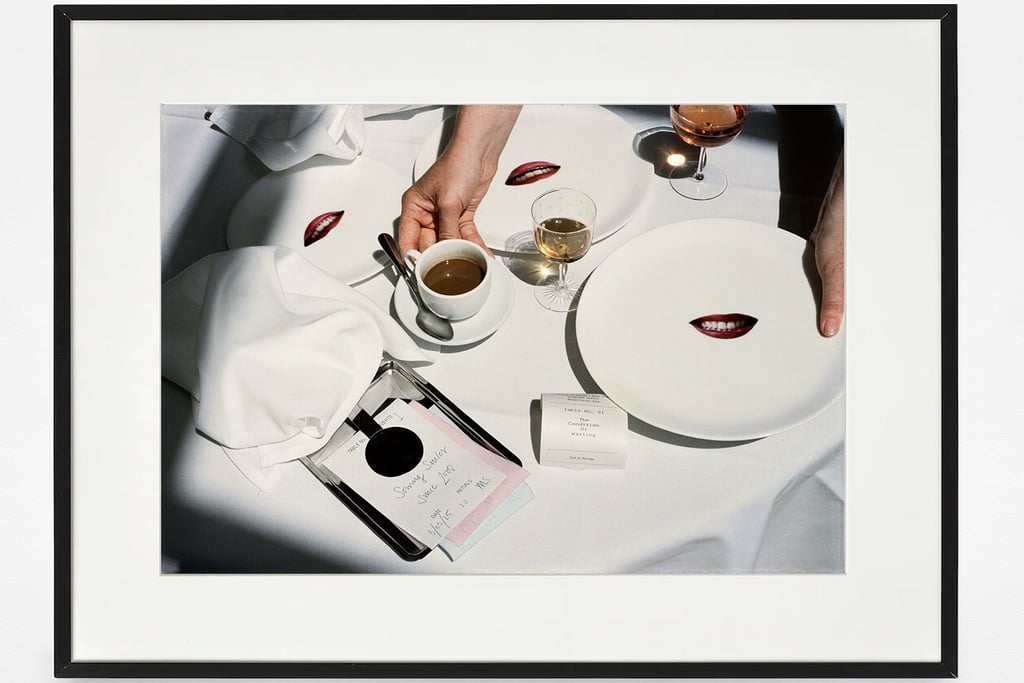
Serving smiles since 2008, Giclée print, 40 x 50cm, 2025